Fantini: specialist in the production of Italian fine faucets
For over seventy years Fantini has been designing and manufacturing innovative bathroom products and fine faucets that have led the company to be the international point of reference for the evolution of design in its sector. The Fantini headquarters are located in an extraordinary site, in Pella, on the shores of Lake Orta in a special and probably unique position in the world. Italian creativity and culture: a characteristic of companies, like Fantini, that can be defined as “Manufactories of Italian Design”, is being able to create and build their own precise and unmistakable identity. Founded in 1947 on the shores of Lake Orta in Northern Italy, Fantini Rubinetti has spent 77 years perfecting the art of luxury faucet manufacturing. What sets them apart: Member of the exclusive Altagamma Foundation (Italy's association of high cultural and creative brands, alongside Ferrari and Prada), winner of the prestigious Compasso d'Oro ADI Award 2020 (Italy's highest design honor), and products in permanent collections at MoMA New York and design museums worldwide. PVD (Physical Vapor Deposition) technology is why Fantini faucets maintain their showroom appearance for 20+ years while standard chrome-plated faucets show wear in 5-7 years. Here's the science: PVD deposits ultra-thin metallic films at the molecular level, creating a finish that's 2x harder than traditional chrome plating, resistant to scratches, corrosion, acids, alkalis, aggressive cleaning products, and UV light degradation. Yes—and Fantini goes beyond minimum compliance. All Fantini faucets meet NSF/ANSI 61 and 372 standards, containing less than 0.25% lead in wetted surfaces (the federal "lead-free" threshold). This satisfies California AB 1953, Vermont Act 193, and all US state requirements. Importantly, Fantini applies these stricter US standards globally—even though European regulations allow up to 2.2% lead. This voluntary commitment to health over profit distinguishes Fantini from manufacturers who meet only local minimums. Fantini offers an intentionally diverse portfolio—from minimalist contemporary to sculptural statements to playful retro—so selection requires understanding your aesthetic intent: Aboutwater represents a strategic partnership (launched 2010) between Fantini and Boffi, two Italian luxury leaders. The collaboration produces ultra-minimalist faucet collections designed specifically to integrate with Boffi's refined bathroom furniture systems—think museum-quality design for architecture-forward clients. Fantini occupies the ultra-luxury tier with pricing comparable to Dornbracht, high-end Gessi, and Waterworks. Here's realistic 2024-2025 budgeting for US market: Professional installation is mandatory for warranty protection and strongly recommended regardless—these are $1,000-$5,000+ Italian precision instruments, not Home Depot impulse purchases. Here's why DIY fails: Phase 1—Define aesthetic and functional requirements: Daily maintenance (30-second habit that prevents 90% of problems):
Where can I buy Fantini faucets in the USA and Canada?
Fantini is sold exclusively through authorized luxury showrooms and design centers - you won't find them at big-box retailers. La Mercanti is proud to be an authorized distributor of Fantini faucets and bathroom fixtures for the entire United States and North American market. Contact us for consulting, pricing and logistics.
Frequently Asked Questions about Fantini Rubinetti
Why is Fantini considered one of Italy's most prestigious faucet brands?
Fantini collaborates with internationally renowned designers including Piero Lissoni, Naoto Fukasawa, Vincent Van Duysen, Matteo Thun, and Marcel Wanders—creating faucets that transcend functionality to become sculptural art pieces. Their iconic "I Balocchi" collection from the 1970s revolutionized the industry as the first colored faucets, transforming bathrooms from purely functional spaces into design experiences.
Every Fantini product is 100% designed and manufactured in Italy, blending artisanal craftsmanship with advanced industrial processes. This isn't mass production—it's heirloom-quality Italian engineering built to last decades.What makes Fantini's PVD finishes superior to standard chrome plating?
Standard chrome plating? It's a surface coating that eventually chips, peels, and degrades—especially in high-humidity bathrooms or coastal environments. PVD bonds to the base metal permanently, so there's nothing to peel or flake. This matters enormously for matte black, gunmetal, brushed gold, and rose gold finishes—colors that look spectacular initially but can degrade rapidly with inferior coating technologies.
Fantini pioneered PVD in luxury faucets during the 1970s with the I Balocchi collection and has refined the technology for five decades. For architects specifying fixtures for high-end residential or hospitality projects, PVD finishes eliminate the callback nightmare of failed finishes three years post-installation. The upfront cost premium (typically 30-40% over standard finishes) becomes negligible when calculated over a 20-30 year lifespan.Are Fantini faucets lead-free and compliant with US drinking water safety standards?
For maximum safety, Fantini's extensive AISI 316/316L stainless steel collections contain zero lead by material composition—marine-grade stainless steel is naturally lead-free, non-toxic, and doesn't leach substances into water. Popular stainless steel options include Milano, Mint, and AF/21 from the Aboutwater collaboration. These are ideal for health-conscious homeowners, coastal properties (corrosion-proof), and projects requiring documented material safety for LEED or WELL Building certification.
All fixtures carry WaterSense certification where applicable (≤1.5 GPM flow) and include progressive cartridges that open in cold-water position first—preventing unnecessary hot water waste and accidental scalding. For architects specifying fixtures for schools, healthcare, or residential projects where water safety is paramount, Fantini provides complete NSF/ANSI certification documentation and material safety data sheets.How do I choose between Fantini's 30+ collections for my bathroom or kitchen project?
For contemporary minimalist spaces: AF/21 (Naoto Fukasawa's Japanese minimalism), AL/23 (Piero Lissoni's refined geometry), Nostromo (industrial simplicity), or Mint (essential forms). These collections use reduction and precision to achieve visual quiet.
For classic elegance with modern sensibility: Icona Classic or Icona Deco (Vincent Van Duysen's timeless proportions), Opus, or Lutezia. These work beautifully in transitional interiors—sophisticated without being trendy.
For architectural statement pieces: Milano (futuristic sculptural presence), Mare (organic flowing forms), or Sailing (Yabu Pushelberg's nautical precision). These become focal points rather than background elements.
For luxury drama: Venezia or Venezia by Venini (handcrafted Murano glass by legendary Venetian artisans—each piece unique), or Fontane Bianche (faucets emerging from natural stone basins in collaboration with Salvatori). These are museum-quality installations for clients who want showstopping luxury.
For playful sophistication: I Balocchi (the iconic 1970s colored collection—still in production and contributing proceeds to water projects in Burundi), or Nice (Matteo Thun's joyful colored and transparent options).
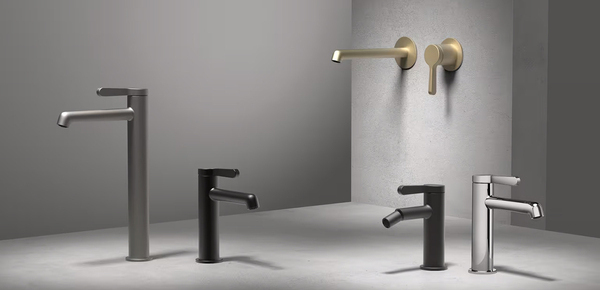
Strategic finish selection: Choose one primary finish for 80% of fixtures (polished chrome for classic, brushed nickel for contemporary, matte black for drama) and possibly one accent finish for 20%. Fantini offers 20+ finishes including specialty PVD options—but restraint creates coherence. Request physical samples before finalizing—finishes photograph differently than they appear in person, especially metallics and matte blacks.What's the difference between Fantini and Aboutwater collections?
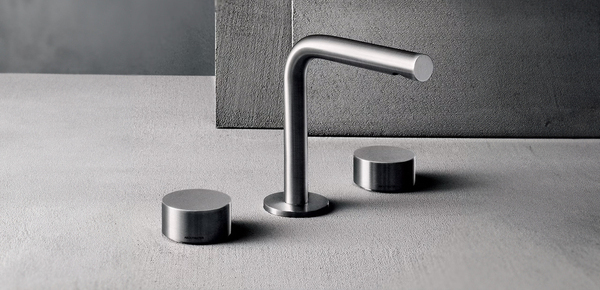
Aboutwater collections include: AL/23 (Piero Lissoni), AF/21 (Naoto Fukasawa), AK/25 (Compasso d'Oro winner 2020), AA/27 (Michael Anastassiades), AW/PIPE (Marcel Wanders), and others. These emphasize pure geometry, perfect proportions, and visual quietness—designed to "disappear" into architectural space while functioning flawlessly.
Choose Aboutwater if: You're designing a complete Boffi bathroom system, ultra-minimalism is your aesthetic, your budget is top-tier luxury, or you want award-winning design innovation that appeals to museum-curators and design editors.
Choose Fantini's main collections if: You want diverse design personalities (classic, modern, colorful, sculptural), your bathroom features mixed brands, you appreciate iconic designs like Venezia or I Balocchi, or your budget is high-end but not unlimited.
Both are manufactured to identical Fantini quality standards with identical material options and finishes. The distinction is aesthetic philosophy—Aboutwater is exclusively minimalist and architectural, while Fantini's broader portfolio embraces diverse design expressions. For architects coordinating Boffi furniture with faucets, Aboutwater ensures seamless visual integration. For standalone faucet specifications, Fantini's main collections offer greater stylistic range.How much should I budget for Fantini fixtures in a luxury bathroom renovation?
Powder room (single sink, wall-mounted faucet): $900-$1,600
Secondary bathroom (vanity faucet, shower system, accessories): $2,800-$5,000
Primary bathroom (dual vanity, freestanding tub filler, luxury shower, accessories): $10,000-$18,000
Breakdown: Two vanity faucets ($2,000-$3,200), floor-mounted tub filler ($3,000-$5,500), multi-outlet thermostatic shower with rainhead and body sprays ($5,000-$9,000), plus flush plates and accessories ($800-$1,200). Premium PVD finishes or special editions (Venezia with Murano glass, Fontane Bianche stone integration) can push totals toward $25,000+.
Kitchen (primary + prep sink, pot filler): $2,200-$5,000
Complete 4-bedroom luxury residence (4.5 baths, kitchen): $32,000-$65,000
This assumes one primary bath with full luxury specification, two secondary baths with quality fixtures, two powder rooms, and kitchen. Add 40-60% for professional installation—a $12,000 primary bathroom fixture package requires $5,000-$7,000 in expert plumber labor, especially for wall-mounted configurations and thermostatic shower systems.
Cost perspective: In a $200,000 primary bathroom renovation, $15,000 in Fantini fixtures represents 7.5% of budget—substantial but proportionate to the overall investment. The longevity differential matters: Fantini's PVD finishes and stainless steel construction maintain appearance for 20-30+ years versus mainstream fixtures requiring replacement every 10-12 years. Calculate cost-per-year, and the premium narrows significantly.Can I install Fantini faucets myself or do I need professional installation?
Warranty requirements: Many Fantini warranties require documented professional installation. Self-installation voids coverage, leaving you without recourse if issues develop.
European engineering complexity: Metric sizing versus American standard threading, wall-mounted rough-in requirements (perfect placement with zero tolerance), thermostatic valve installation (requires pressure balancing and code compliance), and finish protection during installation (one scratch on a PVD surface is permanent and visible).
Hidden cost of errors: Improper installation causes slow leaks that create mold and structural damage discovered years later ($25,000+ remediation). Incorrect rough-in depth for wall-mounted fixtures requires wall demolition and re-plumbing ($3,000-$6,000). Scratched finishes on installed fixtures can't be repaired—only replaced.
Professional installation costs (2024-2025): Deck-mounted bathroom faucet $200-$350, wall-mounted bathroom faucet $500-$900 (includes rough-in), floor-mounted tub filler $600-$1,200, complete thermostatic shower system $1,200-$3,000, kitchen faucet $250-$450. Budget 40-60% of fixture cost for installation in project planning.
Finding qualified installers: Not all plumbers are equal. Ask: "Have you installed Fantini or similar Italian luxury fixtures?" "Do you have experience with wall-mounted installations and thermostatic systems?" "Are you licensed, insured, and will this installation maintain my warranty?" If they answer no to any question or respond "it's just a faucet," they're not qualified. Many authorized Fantini dealers provide installer referrals—use them.
The $400 you save attempting DIY installation becomes $4,000 in damage repair, warranty-voided replacements, or re-installation by professionals fixing your mistakes. For luxury fixtures, professional installation isn't optional—it's protecting your investment.
How-To Guides
How to select and specify Fantini faucets for a luxury bathroom project (architect & designer guide)
Interview clients on style preferences (show Fantini collection imagery—Venezia glass versus AF/21 minimalism versus I Balocchi playfulness reveals aesthetic sensibility immediately). Document functional needs: single or dual vanities, freestanding or built-in tub, shower configuration (rainhead only, multi-outlet with body sprays, outdoor shower for pool area). Assess site conditions: existing plumbing locations, wall thickness for concealed valves, water pressure for shower systems, and ceiling access for overhead rainheads.
Phase 2—Collection and finish selection:
Choose primary collection based on architectural context. For contemporary spaces: AF/21, AL/23, Nostromo, or Mint. For transitional elegance: Icona, Opus, or Lutezia. For statement luxury: Venezia, Milano, or Fontane Bianche. Select one primary finish for entire bathroom (polished chrome for classic, brushed nickel for contemporary warmth, matte black PVD for drama, stainless steel for coastal/wellness). Order physical finish samples—metallics and matte blacks photograph unpredictably. Test samples in actual bathroom lighting conditions before finalizing.
Phase 3—Configuration specification:
Deck-mounted versus wall-mounted (wall requires opening walls during construction for precise rough-in—not suitable for minor remodels). Single-hole versus widespread (fewer penetrations in stone counters reduces crack risk and fabrication cost). Floor-mounted tub fillers create sculptural drama but require routing plumbing through floor structure. Thermostatic shower systems provide superior temperature control and are required for multi-outlet configurations—specify ASSE 1016 certified valves for code compliance.
Phase 4—Documentation and coordination:
Create detailed fixture schedule with manufacturer, collection, model number, finish, and quantity. Include links to Fantini specification sheets. Work with plumber to create rough-in coordination drawings showing supply locations, shut-off valves, backing for wall-mounted fixtures, and ceiling access panels. Order rough-in valves 12-16 weeks before installation date (allow for lead times and shipping). Order trim kits 8-10 weeks before finish plumbing—don't deliver chrome fixtures to active construction sites where they'll be damaged.
Phase 5—Quality control and commissioning:
Inspect rough-in valve placement before walls close—verify dimensions against manufacturer specs (2" error discovered after tile installation requires demolition). Protect finished fixtures during final construction—cardboard sleeves prevent scratches from ladders and tool bags. Test all functions before client walkthrough: hot/cold operation, thermostatic temperature stability, flow rates, and check for leaks at wall penetrations. Document installations photographically for warranty records and future service reference.How to maintain Fantini PVD and stainless steel finishes for decades of beauty
Wipe faucets dry with microfiber cloth after each use. Water contains dissolved minerals (calcium, magnesium) that deposit as spots when evaporating—especially visible on polished chrome and dark PVD finishes. This simple habit prevents mineral buildup requiring aggressive cleaning later. Keep microfiber cloths in each bathroom vanity drawer—if wiping requires effort, it won't happen consistently.
Weekly cleaning (proper technique prevents damage):
Warm water + mild dish soap (Dawn, Meyer's) applied with soft cloth. Wipe all surfaces, rinse thoroughly with clean water, dry completely. This removes soap scum, toothpaste, and bathroom grime without harming PVD coatings or stainless steel. Never use: bleach-based cleaners (Clorox—chlorine attacks metal oxide layers), ammonia-based cleaners (Windex—degrades PVD coatings over time), abrasive powders (Comet, Ajax—physically scratch surfaces), or acidic toilet bowl cleaners (if splashed, permanent damage occurs instantly).
Dealing with hard water deposits:
Mix equal parts white vinegar and water, spray affected areas, wait 5-10 minutes, wipe with soft cloth, rinse thoroughly, dry completely. For stubborn deposits, soak paper towels in vinegar solution and drape over buildup for 30 minutes before wiping. Never use metal scrapers or abrasive pads—they permanently scratch even hardened PVD finishes. Consider installing whole-house water softener if hard water is chronic—prevention is infinitely easier than constant remediation.
PVD finish-specific care:
Matte black, gunmetal, and brushed gold PVD finishes show fingerprints and water spots more than polished chrome. Wipe in consistent direction (if brushed grain is visible, follow the grain). Consider furniture paste wax (Minwax) applied quarterly—creates temporary hydrophobic barrier repelling water and fingerprints. Apply thin coat, let haze, buff with clean cloth. This extends time between cleanings significantly.
What destroys luxury finishes permanently:
Spray-and-walk-away cleaning products (prolonged chemical contact etches surfaces), abrasive pads even labeled "non-scratch" (too aggressive for polished surfaces), mixing cleaning products (bleach + ammonia creates toxic gas, bleach + vinegar creates chlorine gas), and ignoring immediate spills of acidic substances (wine, coffee, lemon juice—these etch metal if left for hours). If aggressive chemicals contact fixtures, flood with water immediately—don't wipe, as wiping spreads the chemical.
Long-term preservation:
Professional refinishing is possible for damaged PVD finishes but costs $500-$1,000 per fixture. Prevention through proper maintenance is infinitely preferable. With correct care, Fantini PVD finishes maintain showroom appearance for 20-30 years. If dulling or discoloration appears, review cleaning products (likely something abrasive or chemical is attacking the surface) and verify water softener is functioning (hard water accelerates finish degradation).


3415 South Sepulveda Blvd
Suite 1100
Los Angeles, CA 90034 - United States
T +1 855 335 8079
VAT IT01525090443
